
MULTIPLATES Journal
How to choose a beautiful vehicle number in the UAE
Quick answer: decide what should be memorable — repetition, mirror, sequence or a meaningful digit. Then identify the emirate and plate type, separate the visible sample from advertising language, and set a budget range. Choosing a number is not only visual: match it to the vehicle, the purpose and the official verification route.
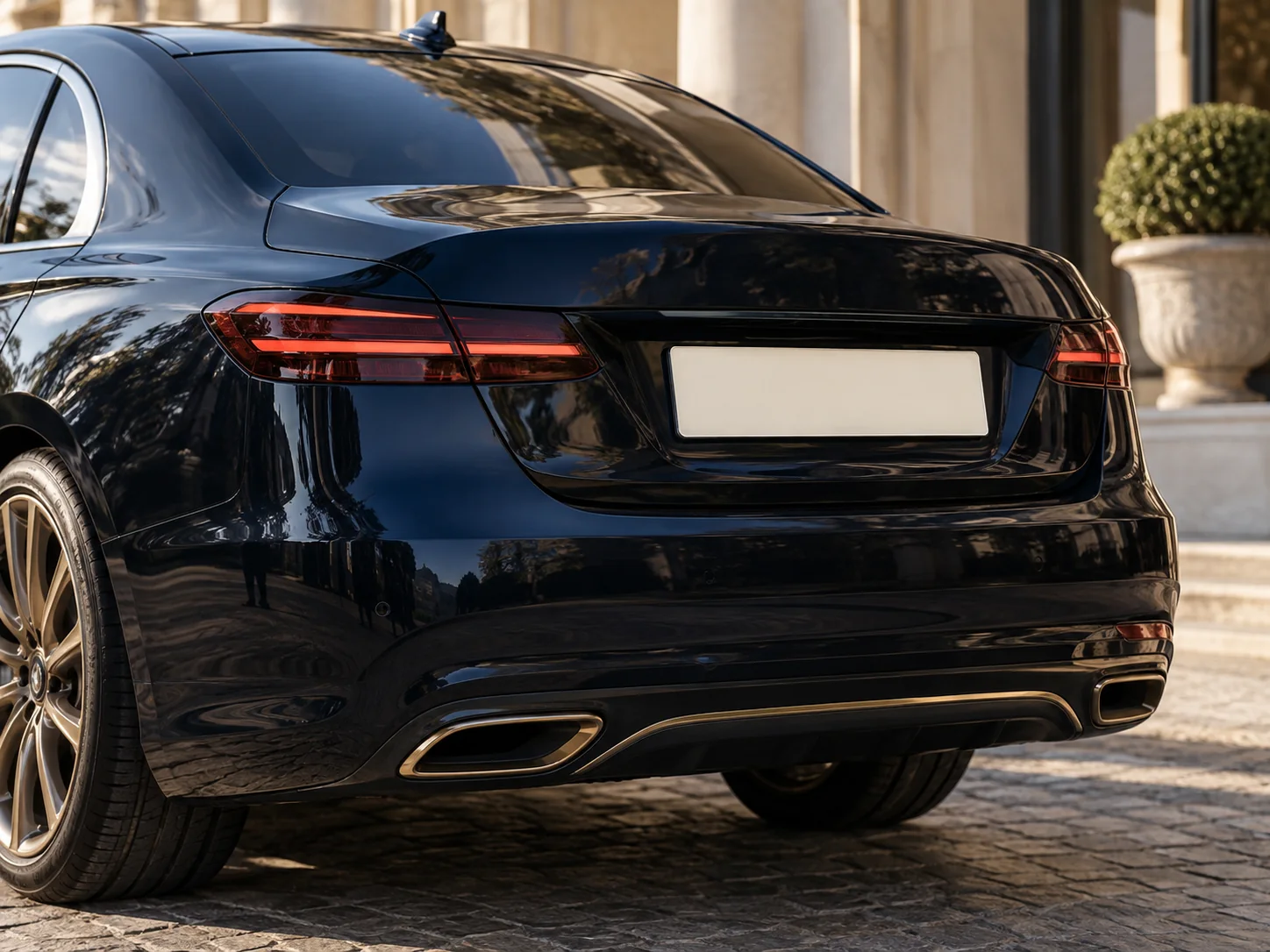
Patterns you can compare
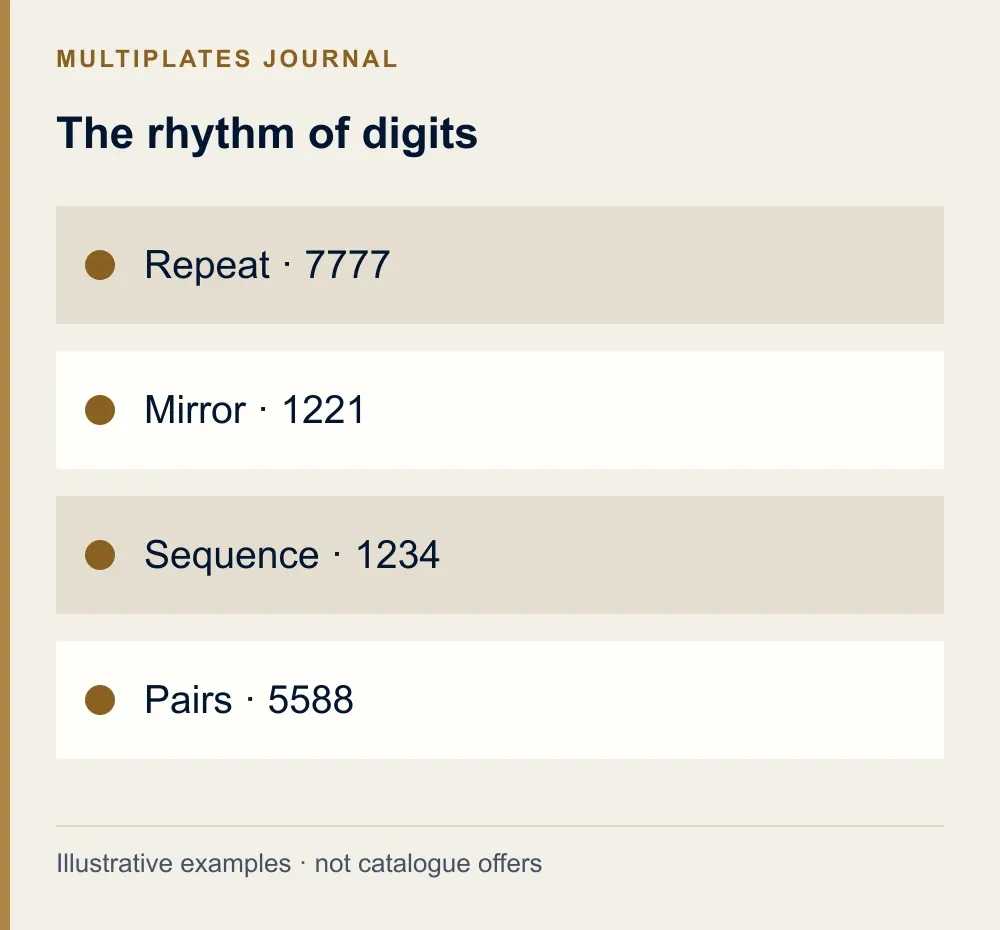
A repetition uses the same digits and is read quickly. A mirror creates left-to-right symmetry. A sequence gives rhythm but may be less visible at distance. A meaningful combination links the number to a year, date or private symbol. These are not value rankings: a pattern explains visual appeal, not official status.
Compare options in one table: digits, code, character count, readability, suspected category and source. Note how the number looks on a real plate rather than a large promotional render. The table may show that a beautiful digit set is hard to read, while a simple sequence better fits the purpose.
| Pattern | Strength | Question |
|---|---|---|
| Repetition | quickly memorable | does the code remain clear? |
| Mirror | balanced symmetry | does the format preserve it? |
| Sequence | clear rhythm | does it look intentional? |
| Meaningful digit | personal relevance | does it matter beyond the owner? |
Beauty is not rarity
“Rare”, “premium” and “exclusive” are source claims, not measurements. Ask whether rarity is explained by code, category, limited series or only a short number. A public card may show a combination and a claimed price; it does not prove owner, current availability or transfer rights.
Ask a concrete question: which fact was checked, by which source and on what date? If the answer repeats an advertising adjective, it is not verification. Keep the claim and confirmed fact in separate fields.
Emirate, code and category
The same digit sequence is not the same number across every emirate. Record emirate, then car or motorcycle, standard, Classic or suspected special category. Keep code and digits separate: code belongs to a visible system format, while digits create the pattern. Category cannot be inferred from attractive numbers.
If code or category is unclear, leave it unknown. Comparing Dubai, Abu Dhabi and Sharjah requires each emirate’s official context, not a rule carried from one photograph. Use the relevant government service for an operation. [Dubai RTA — Driver and Car Owner] [Abu Dhabi Mobility — Vehicle Licensing Services]
Two detailed choices
Example one: a buyer wants 777 for a personal car and accepts several emirates. They select car samples, record each code and category, then compare readability and source. If two options share digits but one is Classic and one standard, they are different decisions. The final choice depends on confirmed status and the applicable official route, not repetition alone.
Example two: a business owner wants a consistent rhythm for four cars. They choose a common principle — such as a matching ending — and allow different first digits. The table records number, code, emirate, readability, alternative and check date. This is more robust than promising four identical numbers: each position requires its own check.
In both cases, state the trade-off. Fixed digits improve recognition but narrow the search. A fixed code or category gives a consistent context but requires flexibility in digits. Record what cannot change and what can.
Budget without invented prices
Start with a range: comfortable limit, stretch limit and walk-away point. State whether your internal budget covers only the number or also official payments and services that may apply. A card price is the source’s indication; it does not establish the final amount.
Compare offers only after defining the same object. Do not compare a car standard sample with Classic or motorcycle and infer value. If an amount is unexplained, ask what it includes and its date; do not invent fees.
What must stay fixed and what can move
State emirate, vehicle type, preferred category, readable code, digits or pattern, sample link and budget range. Ask the reply to separate public sample, confirmed characteristics, availability and official next step.
You can agree in advance to vary the code, individual digits, exact order or colour impression. Set the category and vehicle type before comparing options, and do not change them merely to obtain a more attractive pattern. Write priorities such as “digits matter more than code”. This turns taste into a checkable enquiry.
FAQ
Which pattern is most valuable? There is no universal answer: visual memorability and official status are different questions. Should you choose a short number? Only when it fits the purpose and is confirmed in context. Can a photograph prove everything? No; it cannot establish current availability, owner or transfer.
Why can two matching numbers have different prices? Emirate, code, category, series, source and conditions may differ. Can four identical fleet numbers be guaranteed? No, each position needs a separate check. What if the source is incomplete? Preserve the unknown and ask a focused question.
Next step
Put your criteria and acceptable trade-offs in a request for sourcing. MULTIPLATES will check available information and return a clear next action.