
MULTIPLATES Journal
UAE fleet number plates: how to request a coordinated pattern
A coordinated pattern can make a fleet feel deliberate, but it does not mean every vehicle will receive an identical number. Emirate, category, vehicle type, availability and transfer authority are checked per item. The practical task is therefore to write a request for comparing individual options, without promising a ready-made set.

The recognition goal
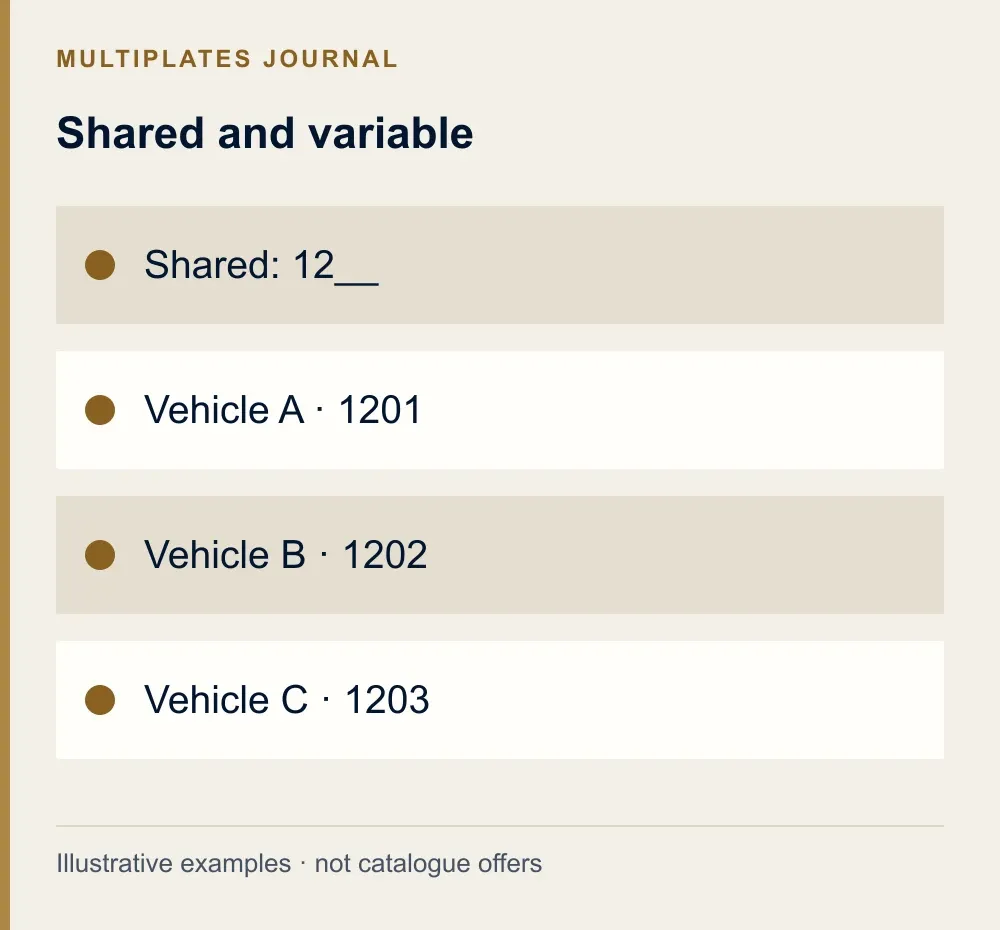
Recognition can come from a repeated pair, a shared ending, a similar rhythm or one sequence. An illustrative 12xx pattern can preserve the idea while final digits vary. This is an editorial example, not an availability list or proof that the format is permitted in every emirate.
Decide what an observer should notice: repetition, symmetry, a short ending or a consistent visual character. Keep that goal separate from price, rarity and resale claims.
What is shared and what can differ
Shared elements can be anchor digits, grouping order, an acceptable range and a backup rule. Code, category, character count, vehicle type and physical execution may differ. If vehicles are registered in different emirates, one visual idea does not override local systems.
Separate required from preferred. Required might be digit 2 and a repeatable ending. Preferred might be similar colour character or length. Tolerance says which digits can change and when another code is acceptable. This is more realistic than asking for identical plates across every vehicle.
Use a separate check for motorcycles or commercial vehicles. A car example does not automatically transfer. A public card shows an information item, not authority to include it in a fleet.
Three coordination strategies
Choose one primary strategy and one backup. Combining every requirement can make a request unworkable and create a false expectation of a ready set.
| Strategy | What stays shared | Trade-off |
|---|---|---|
| Same pair | two anchor digits across options | endings and codes may differ |
| Shared range | one grouping principle | exact combination is not guaranteed |
| Same ending | recognisable final group | opening digits may differ; category follows the fleet and official conditions |
Two illustrative fleets: 3 and 20 vehicles
For a three-vehicle fleet, begin with one emirate and one vehicle type where possible. A request might say: “Three cars; coordinated 12xx rhythm; digits 1 and 2 required; endings may vary; two backups per vehicle.” Check primary and backup cards, then record category, source, check date and costs for each. This does not promise that three suitable items will be found together.
For a twenty-vehicle fleet, choose two or three priorities that reflect the real fleet: for example, one emirate and vehicle type, a shared digit rhythm and an agreed tolerance for substitutions. Treat everything else as preferred. Do not change the emirate or vehicle type merely to obtain a matching pattern; those choices must follow the vehicles and the applicable official conditions. Split the request into batches and record each approved exception.
Large fleets need reproducibility. Keep source, check date, found/confirmed status and replacement reason for every item. Do not label an entire fleet ready because several numbers match. If an item disappears, agree the backup strategy before the next batch.
Phases and budget without invented prices
State a per-unit ceiling and priority order without inserting demonstration amounts. Decide what happens above the ceiling: change the exact pattern, move the item to the next batch or stop. A public card remains an indication until the specific item, cost composition and official next step are confirmed.
The current /catalog/sets constructor can help compare combinations of individual cards. It does not turn selected cards into a guaranteed available set. For B2B planning, send a fleet enquiry.
What to include in the request
Include current and later vehicle counts, emirates, vehicle types, pattern strategy, required digits, tolerances, per-unit ceiling, phases and decision owner. Ask what must be confirmed for every item: availability, transfer authority, category, source date and cost breakdown.
Do not put Emirates IDs, driver documents, codes or bank details in a public enquiry. Operational parameters are enough for initial sourcing. If an official process needs documents, use its protected channel.
FAQ
Does one pattern mean identical numbers? No; it is a shared visual logic with defined tolerances.
Can twenty numbers be sourced at once? Availability and authority are checked per item; completeness is not promised.
Do different emirates prevent a shared style? No, but code, category and format may differ, so write tolerances down.
Does /catalog/sets mean a ready set? No; it is a constructor for comparing individual cards.
What if the exact pattern is unavailable? Use the agreed backup strategy and record the change.
Should documents be sent immediately? No; start with request parameters.
Next step
Separate required, preferred and backup criteria, then send the B2B fleet enquiry through the fleet enquiry. Keep the answer for each item separate and verifiable.